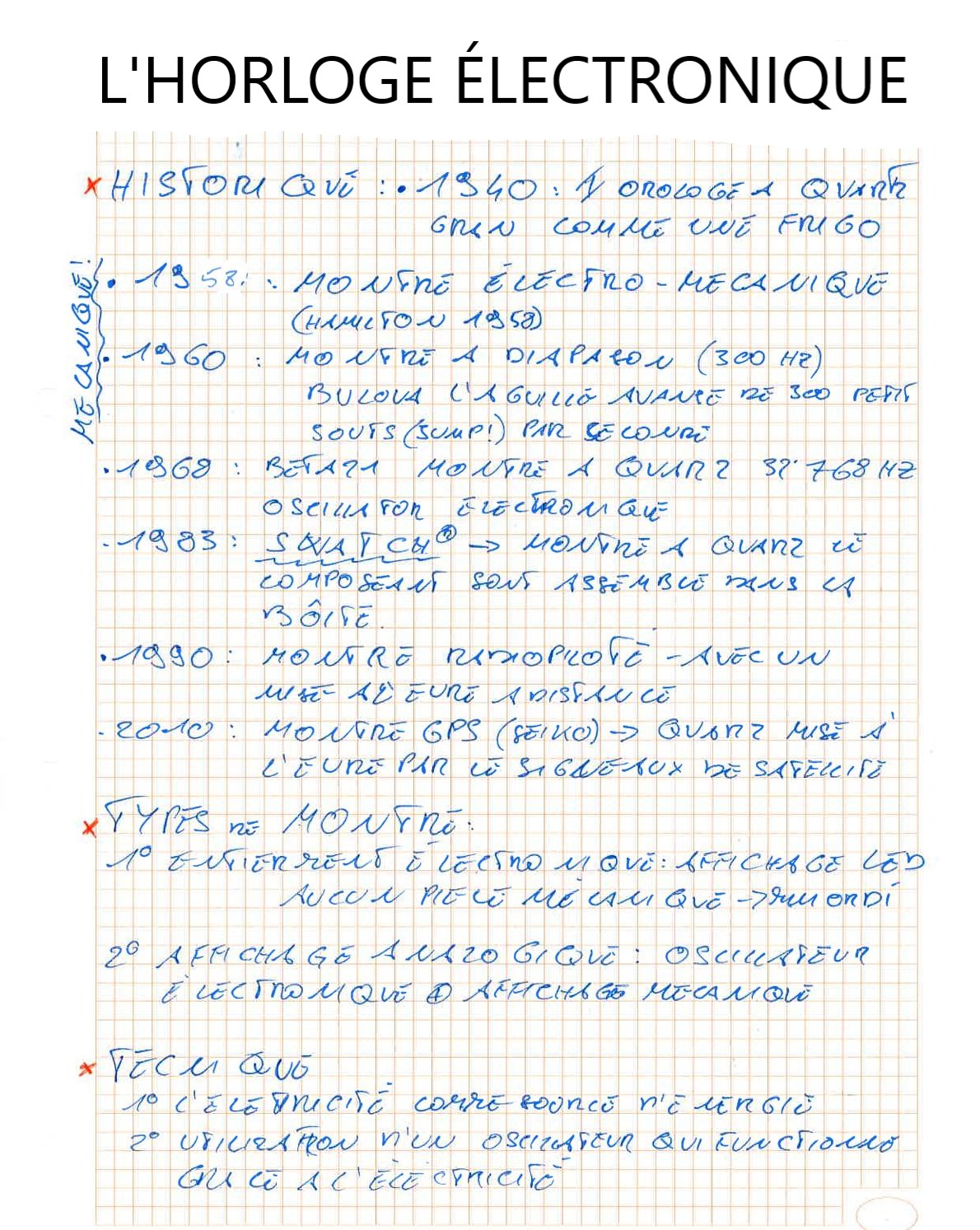
1. History of Electronic Watchmaking
- 1940: First quartz clock (imposing size, equivalent to a large refrigerator)[cite: 6].
- 1958: Electromechanical watch (Hamilton 500)[cite: 6].
- 1960: Tuning fork resonator watch at 300 Hz (Bulova Accutron): the seconds hand advances in 300 small jumps/second, giving the illusion of a smooth glide[cite: 6].
- 1968: Beta 21 prototype (Centre Électronique Horloger - CEH), Swiss quartz watch oscillating at 32,768 Hz[cite: 6].
- 1983: Launch of the Swatch®: simplified quartz watch where gear and case components are directly integrated and soldered into the caseback[cite: 6].
- 1990: Radio-controlled watch: daily time synchronization via radio waves[cite: 6].
- 2010: GPS watch (Seiko Astron): quartz time base automatically adjusted by satellite signals[cite: 6].
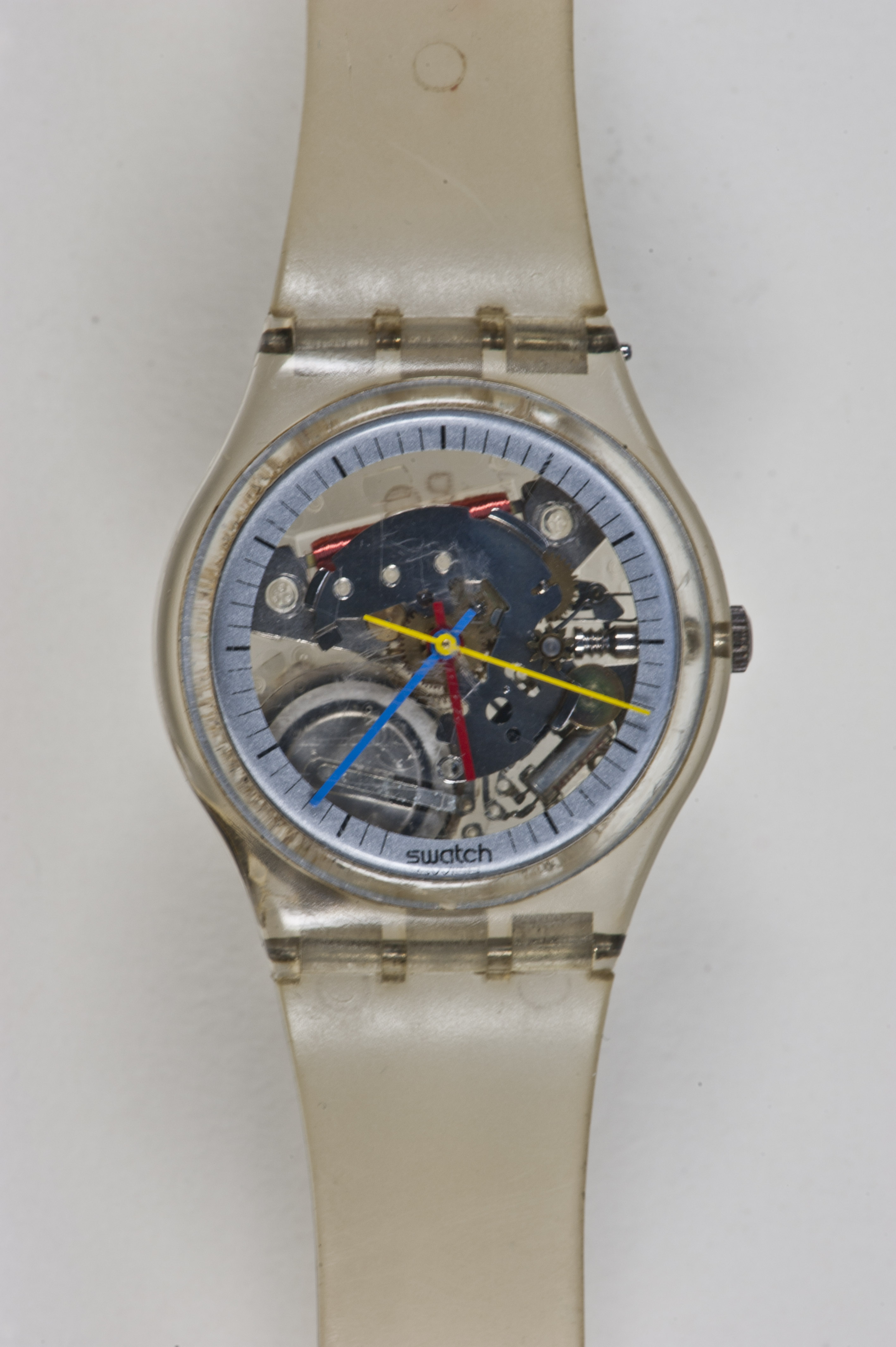
1983 Revolution: Movement integrated into the Swatch case[cite: 6]
📷 ORIGINAL HANDWRITTEN NOTE (01-46) — History of Electronic Clockwork & Principles
2. Display Architectures: Analog vs LCD Screen
Note: The advent of quartz did not only concern mass watchmaking. Starting in the 1970s, the most prestigious Haute Horlogerie manufactures (Rolex, Omega, Zenith) developed quartz calibers of exceptional finish, proving the nobility of this technology[cite: 6].
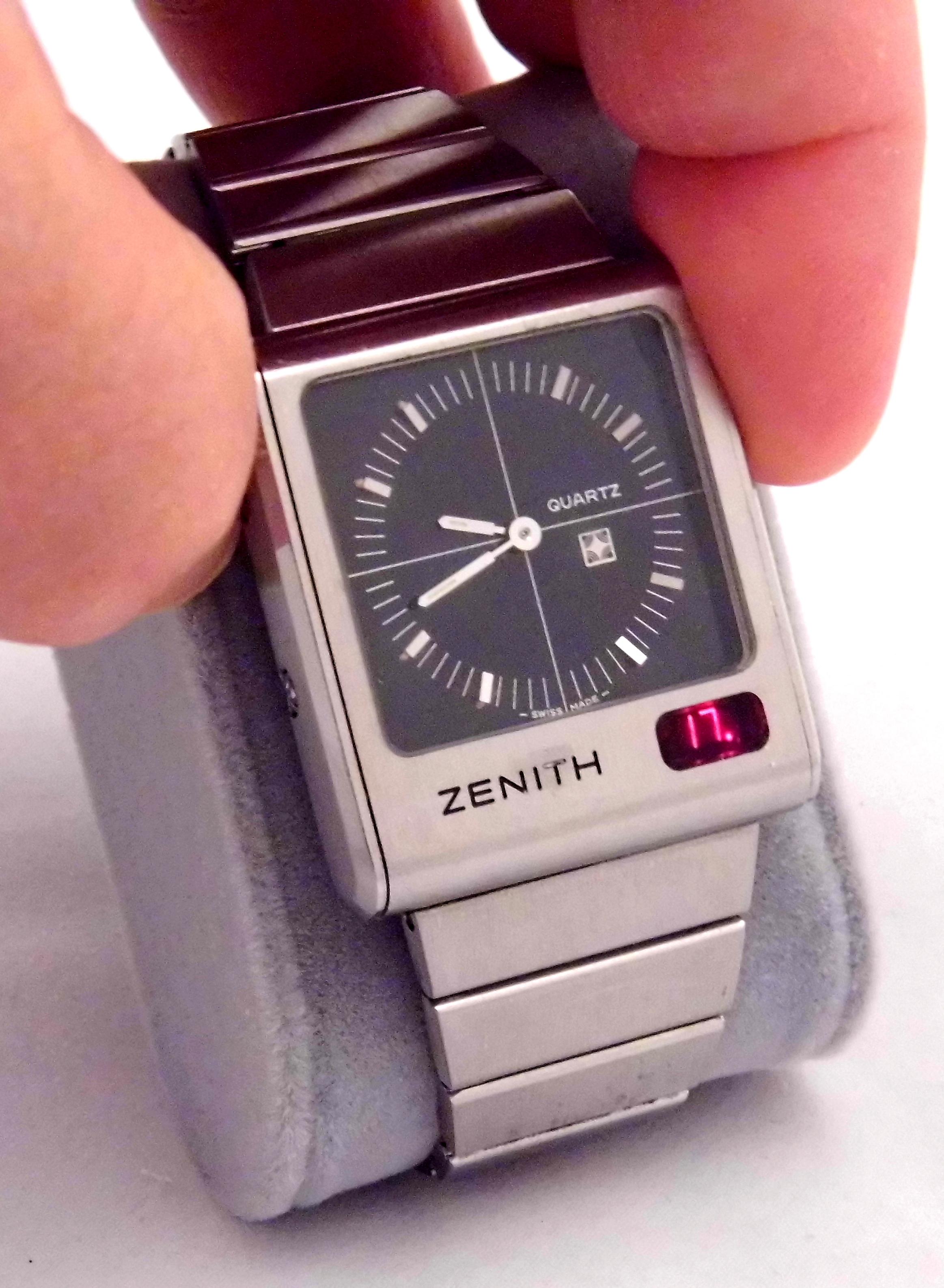
Zenith Futur TimeCommand (1975)
A perfect hybrid example of Haute Horlogerie: traditional analog display combined with a digital electronic module (LED)[cite: 6].
1° Analog Quartz Watch (Hands)
Energy comes from the battery and powers the Integrated Circuit (IC). The IC stimulates the Quartz which oscillates at 32,768 Hz. The IC divides this frequency and transmits a bipolar electrical impulse per second to the coil. The coil magnetizes the stator, which rotates the rotor by a half-turn (180°), driving the gear train and seconds hand[cite: 6].
2° Fully Electronic Quartz Watch (LCD/LED Display)
No moving mechanical parts! The IC directly manages the time base and drives the screen segments (liquid crystals or light-emitting diodes), with auxiliary lighting and multi-function display capabilities on demand[cite: 6].
3. Key Components: Printed Circuit, Integrated Circuit & Quartz
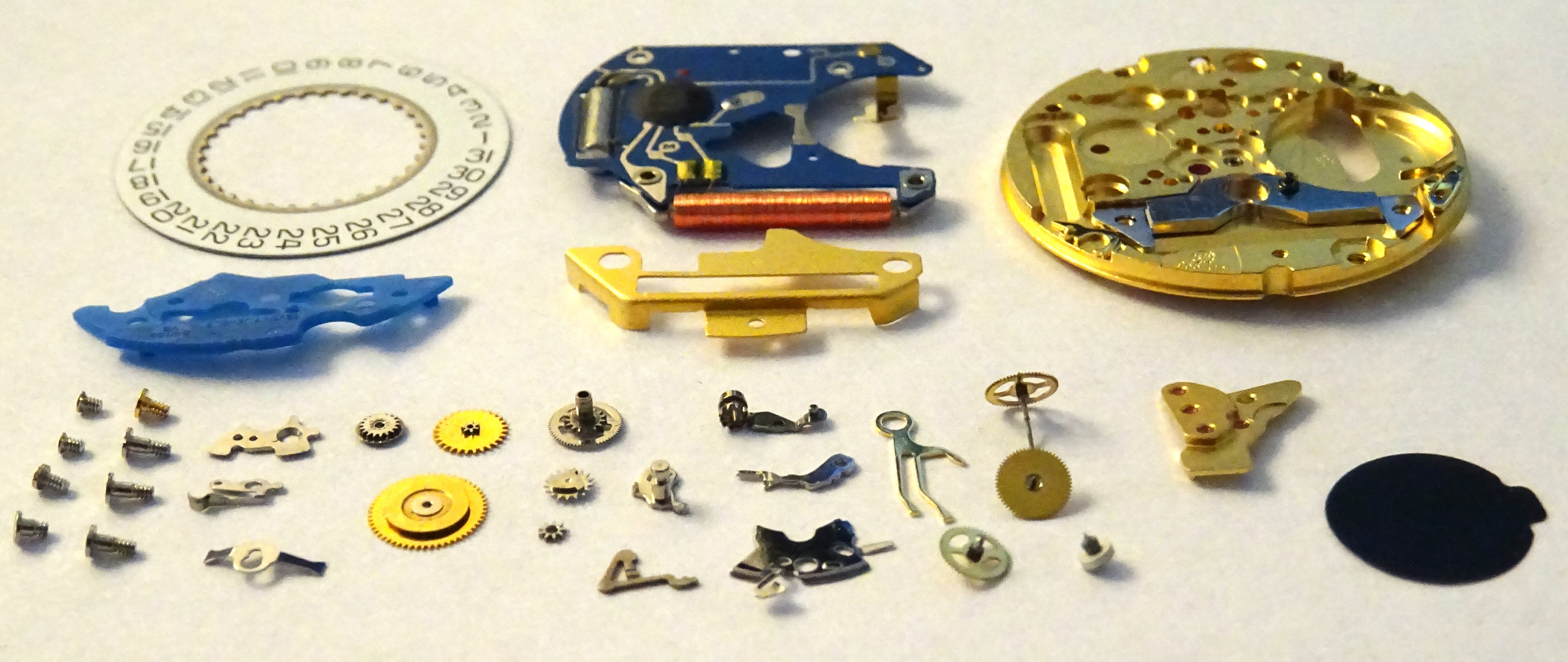
Exploded ETA-ESA 955.412 caliber: visible separation between the mechanical mainplate, electronic circuit (blue), coil (copper), and time gear train[cite: 6].
* Image: Public Domain (CC0). ETA is a registered trademark of Swatch Group SA. Used for strictly educational purposes[cite: 6].
- 1° Printed Circuit Board (PCB): Made of epoxy resin (insulating material). It serves as a structural base and integrates copper conductive tracks[cite: 6].
- 2° Integrated Circuit (IC): Designed in pure Silicon. Its 4 workshop functions[cite: 6]:
- Power the quartz resonator[cite: 6].
- Divide and count oscillations (Hz)[cite: 6].
- Deliver the driving impulse to the coil every second[cite: 6].
- Drive additional functions (calendar, thermo-compensation, etc.)[cite: 6].
- 3° The Quartz Tuning Fork:
- Material: Synthetic quartz cut in the shape of a miniature tuning fork[cite: 6].
- Piezo-Electric Effect:
• Under mechanical compression ➔ Appearance of an electrical voltage at the extremities[cite: 6].
• Conversely, under electrical voltage ➔ Continuous deformation and mechanical vibration at 32,768 Hz[cite: 6].
- Sensitivities & Behavior:
• Magnetism: Quartz is 100% immune to magnetic fields (only the stepper motor can be disturbed)[cite: 6].
• Shocks: Immune[cite: 6].
• Temperature: Calibrated precisely for peak precision at 25°C. Any thermal deviation (cold or hot) produces a frequency loss causing a delay in the rate[cite: 6].
📷 ORIGINAL HANDWRITTEN NOTE (01-48) — Printed Circuit, IC Functions, Piezo-Electric Effect & Temperature
4. Quartz Chronometer & Thermo-Compensation (COSC Certification)
To achieve certified chronometric precision (COSC Quartz), the caliber incorporates a thermal sensor[cite: 6]:
- Principle: A thermometer integrated into the IC continuously monitors caliber temperature (between -10°C and +60°C). The IC calculates thermal drift of the quartz and adjusts the counting of driving impulses (via inhibition)[cite: 6].
- Performance: A thermo-compensated movement is approximately 20 times more precise than a standard quartz movement[cite: 6].
5. The Watch Battery & EOL Warning Function
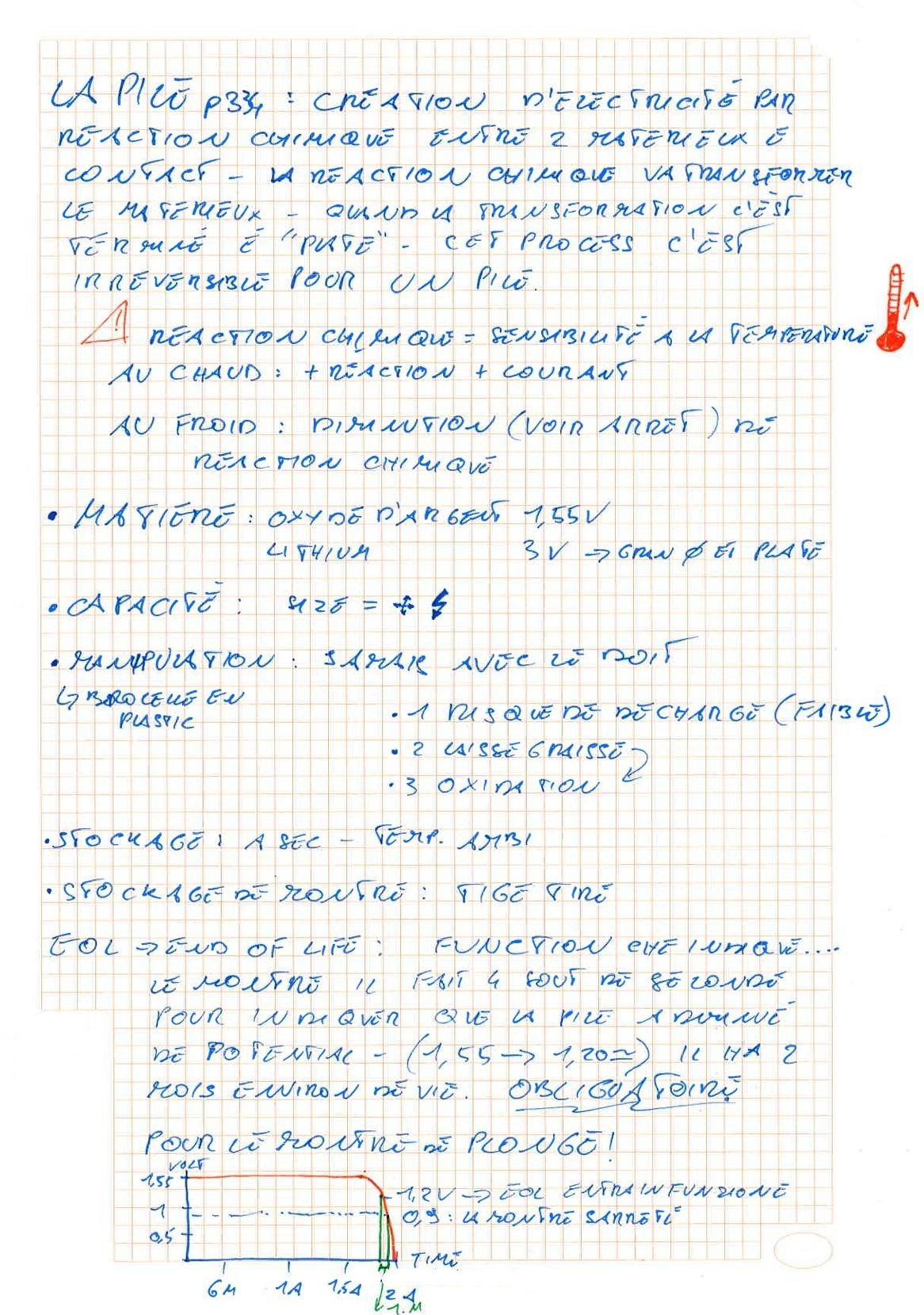
- Electrochemical Principle: Electricity production via irreversible oxidation-reduction reaction between two metals[cite: 6].
- Silver Oxides (1.55 V): Standard for wristwatches (very flat discharge curve)[cite: 6].
- Lithium (3.0 V): High capacity, large diameter and flat format[cite: 6].
- Workshop Rules for Handling:
- NEVER with fingers! Use plastic or insulated tweezers (micro-short-circuit risk, acid grease deposit, and contact oxidation)[cite: 6].
- Dry storage at room temperature[cite: 6].
- Prolonged storage of watches: Pulled stem to cut motor power[cite: 6].
- EOL Function (End of Life):
- When voltage drops from $1.55text{ V}$ to approx. $1.20text{ V}$, the seconds hand advances in 4-second jumps to warn the user[cite: 6].
- About 2 weeks to 1 month of autonomy remains before complete stop ($0.9text{ V}$)[cite: 6].
- Mandatory function on dive watches (vital safety)[cite: 6].
📷 ORIGINAL HANDWRITTEN NOTE (01-49) — Battery Characteristics, Handling & EOL Discharge Curve
6. Lavet Stepper Motor & Finishing Gear Train
The Lavet electromechanical motor transforms each electrical impulse from the IC into mechanical displacement[cite: 6]:
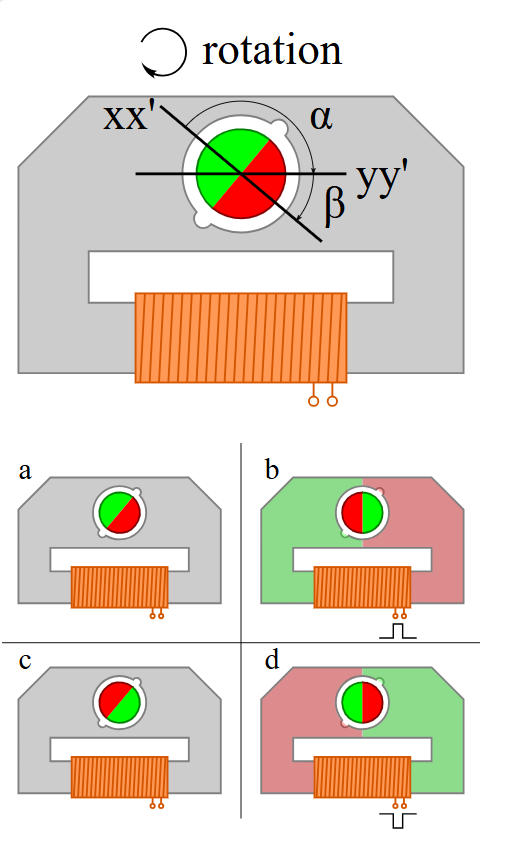
Rotation kinematics of the magnetized rotor[cite: 6]
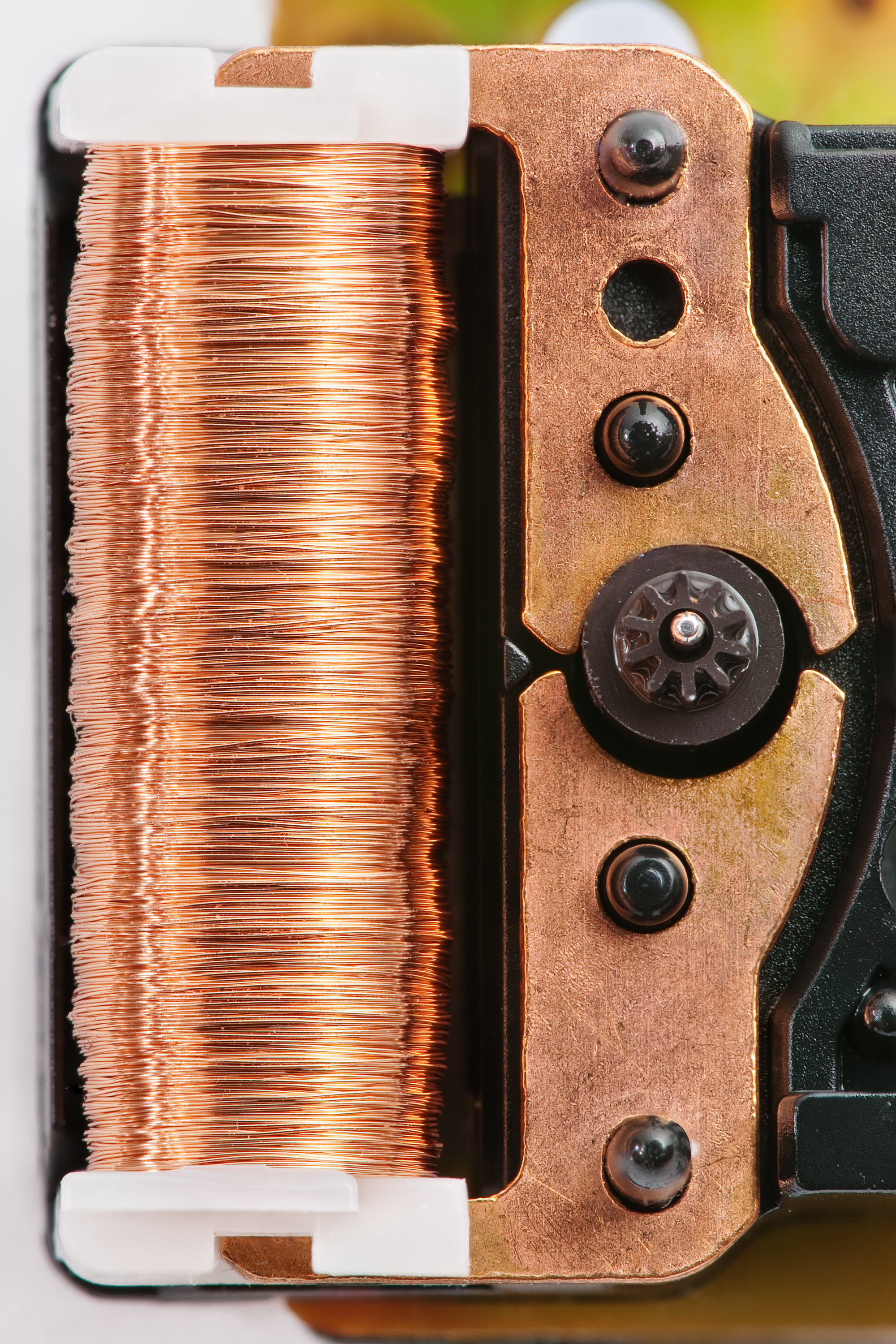
Stator and coil in pure copper wire[cite: 6]
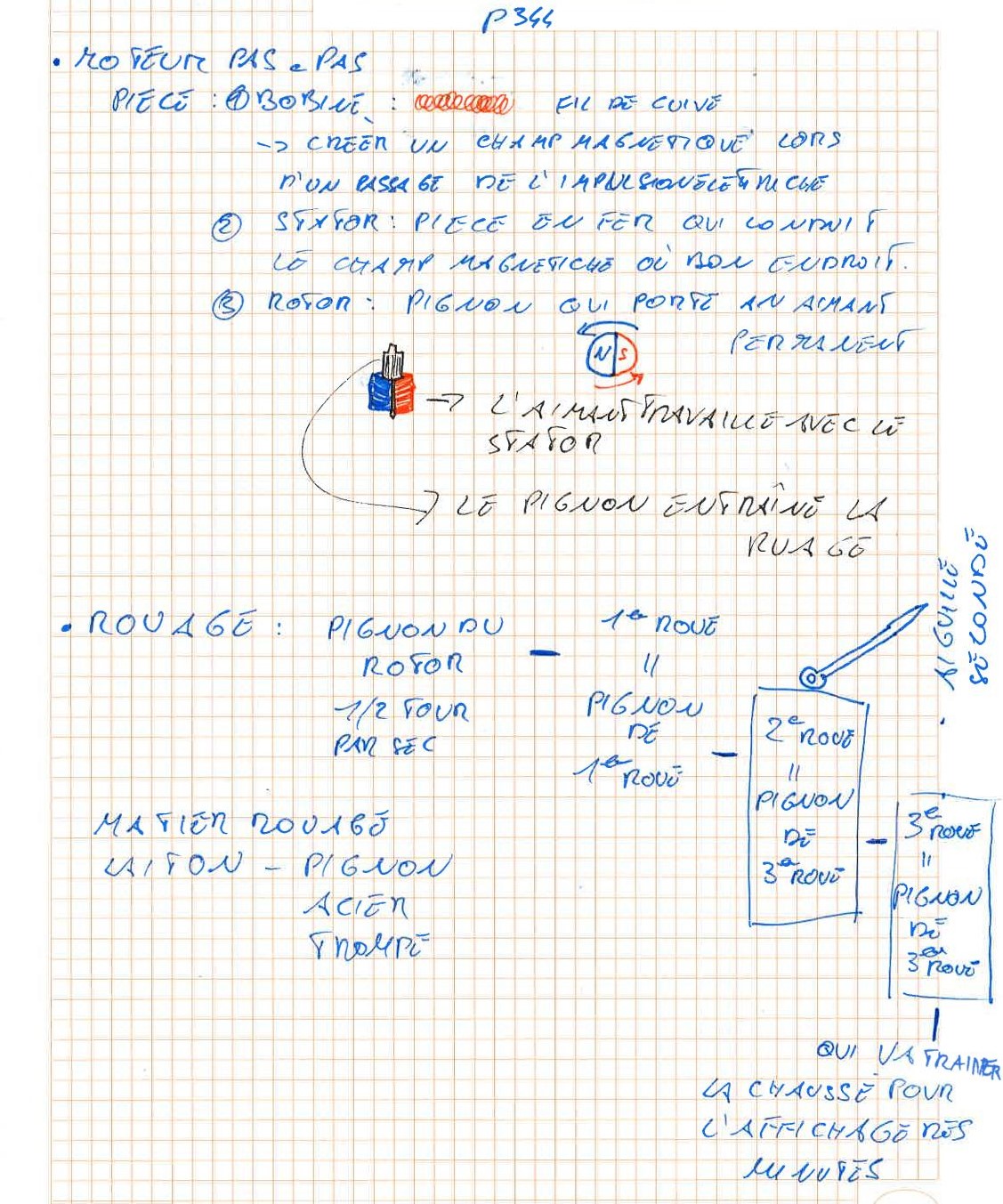
- 1° Coil: Wound insulated copper wire generating a magnetic field when impulse passes[cite: 6].
- 2° Stator: Soft iron part guiding and concentrating magnetic field lines toward the rotor[cite: 6].
- 3° Rotor: Pinion secured to a permanent bipolar magnet (North/South). The magnetic field rotates it by a half-turn (180°) per second[cite: 6].
- 4° Reduction gear train:
Rotor pinion ➔ 1st wheel || 1st wheel pinion ➔ 2nd wheel (Seconds) ➔ 3rd wheel ➔ Cannon pinion (Minutes Display)[cite: 6]
Materials: Brass wheels, hardened steel pinions[cite: 6].
📷 ORIGINAL HANDWRITTEN NOTE (01-52) — Stepper Motor Anatomy (Coil, Stator, Rotor) & Gear Train
7. Hand Balancing, Hybrid Systems & Workshop Overview
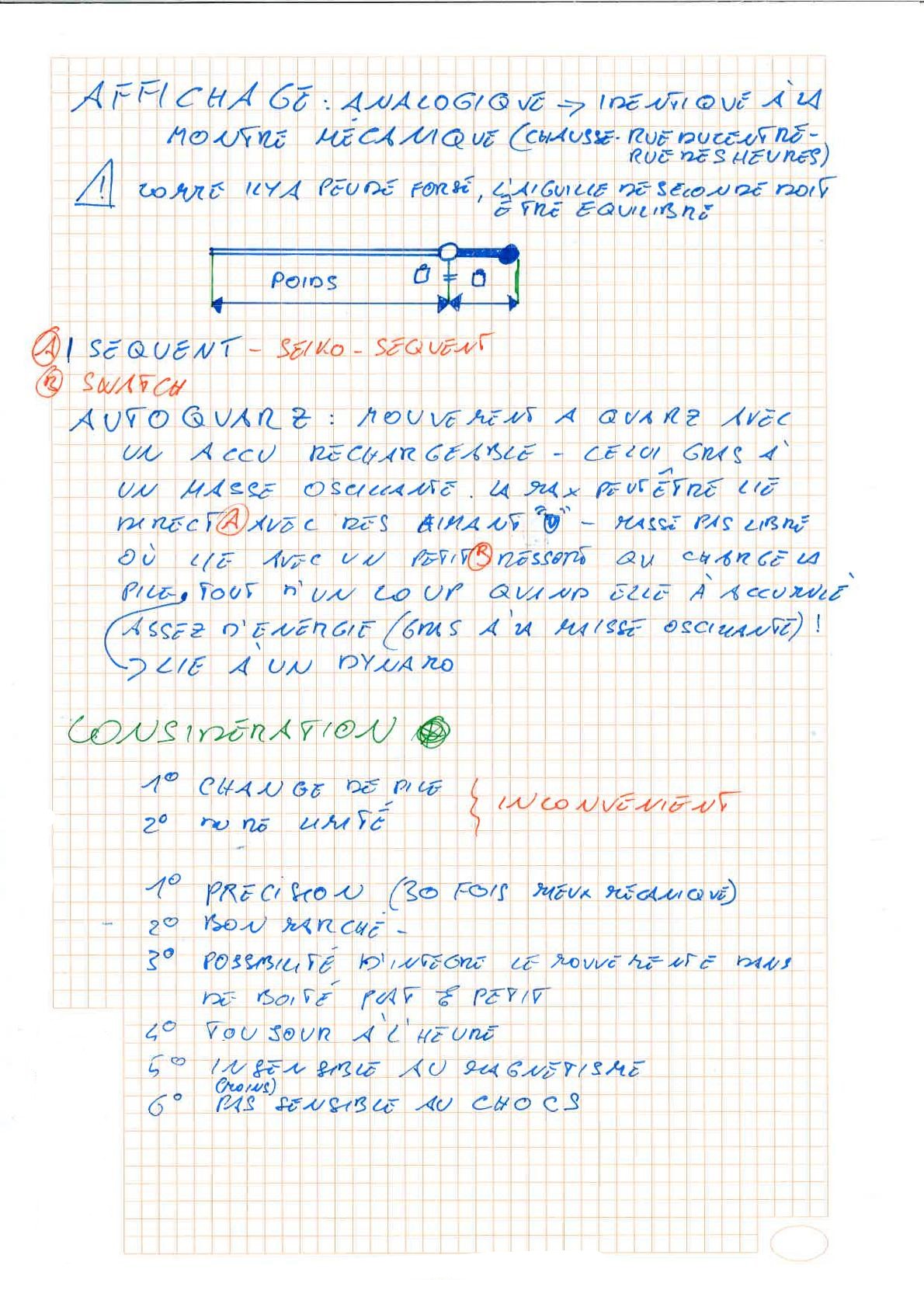
- Seconds Hand Balancing: Due to very low available motor torque, the seconds hand must possess a balanced counterweight to prevent energy overconsumption[cite: 6].
- Hybrid Movements (Autoquartz / Kinetic):
- Combination of a quartz and a rechargeable accumulator powered by a mechanical oscillating weight via a micro-generator (dynamo)[cite: 6].
- Examples: Seiko Kinetic (Kinetic Direct Drive) and ETA Autoquartz (Swatch Group)[cite: 6].
| Advantages of Quartz |
Disadvantages of Quartz |
| • Exceptional precision (30 times higher than mechanical movement)[cite: 6] |
• Dependence on regular battery replacement[cite: 6] |
| • Highly competitive manufacturing cost[cite: 6] |
• Rate sensitivity to thermal variations (excluding thermo-compensation)[cite: 6] |
| • Reduced footprint (ultra-thin and compact calibers)[cite: 6] |
• Limited lifespan of electronic components over the long term[cite: 6] |
| • Immune to mechanical shocks and direct magnetism[cite: 6] |
• Absence of heritage value and traditional mechanical nobility[cite: 6] |
📷 ORIGINAL HANDWRITTEN NOTE (01-53) — Hand Balancing, Autoquartz Systems & Workshop Considerations

.jpg)