4. Technical Characteristics of Nivaflex® Material
Metallurgical composition and properties of alloys for watch mainsprings:
| Alloy | Co | Ni | Cr | Fe | W | Mo | Ti | Be |
|---|
| Nivaflex® 45/18 | 45% | 21% | 18% | 5% | 4% | 4% | 1% | 0% |
| Nivaflex® 45/5 | 45% | 21% | 18% | 5% | 4% | 4% | 1% | 0.2% |
- Physical Properties: Density 8.5 g/cm³, 100% Non-magnetic.
- Watchmaking Assets: Completely stainless, hardness (830 Vickers), high strength.
5. Transmission: Kinematic Train & Wheel Structure
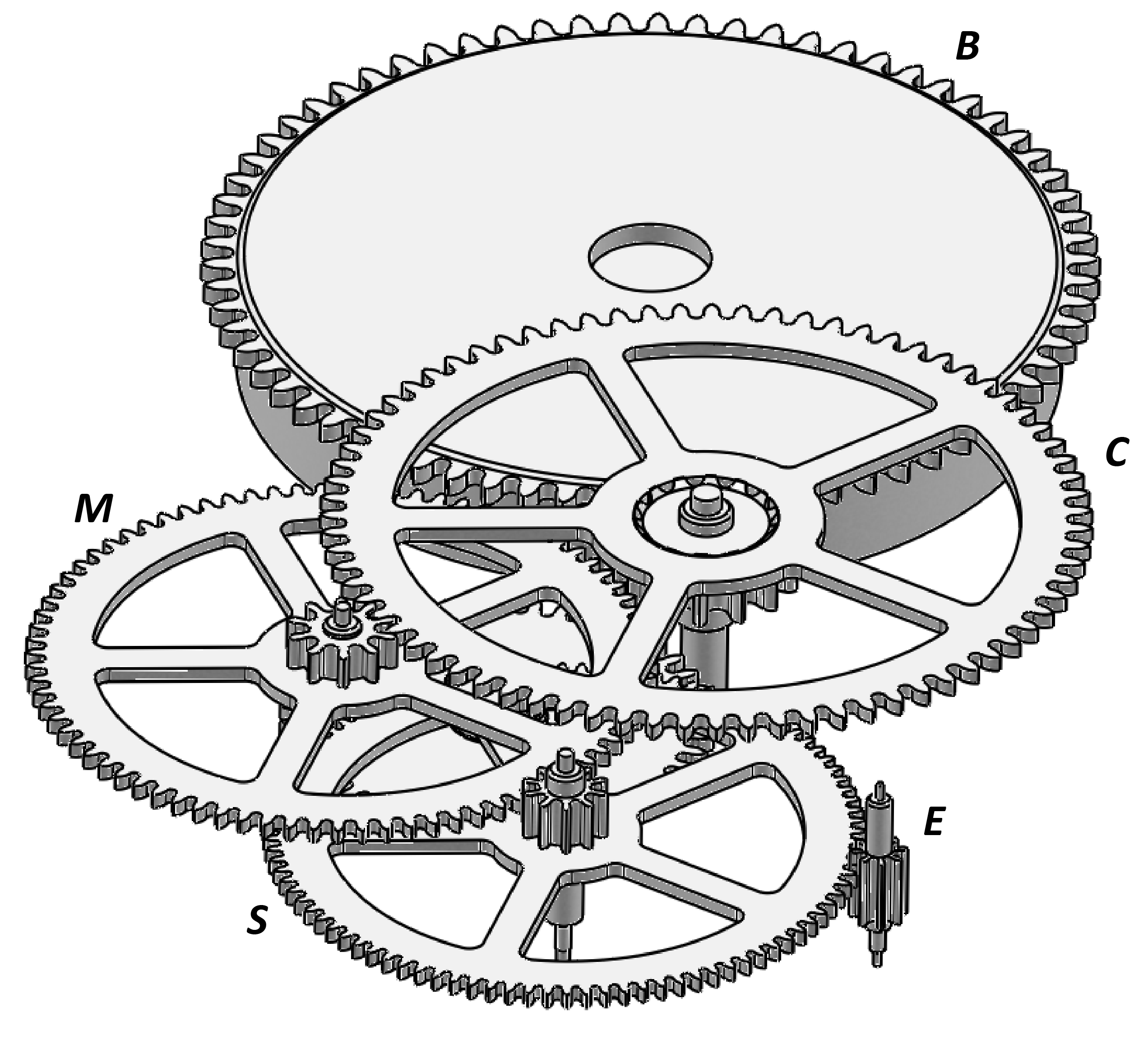
- Kinematic Order:
Barrel ➔ Center Wheel ➔ Third Wheel ➔ Seconds Wheel ➔ Escapement
1
2
3
4
5
1 B — Barrel
2 C — Center wheel
3 M — Third wheel
4 S — Seconds wheel
5 E — Escapement pinion
- Wheel Structure: Web/Plate (brass), Pinion (steel). Assembly by press-fit.
- Cutting / Profiling: Form milling (cycloidal profile).
- Treatment: Pivot burnishing for surface hardening.
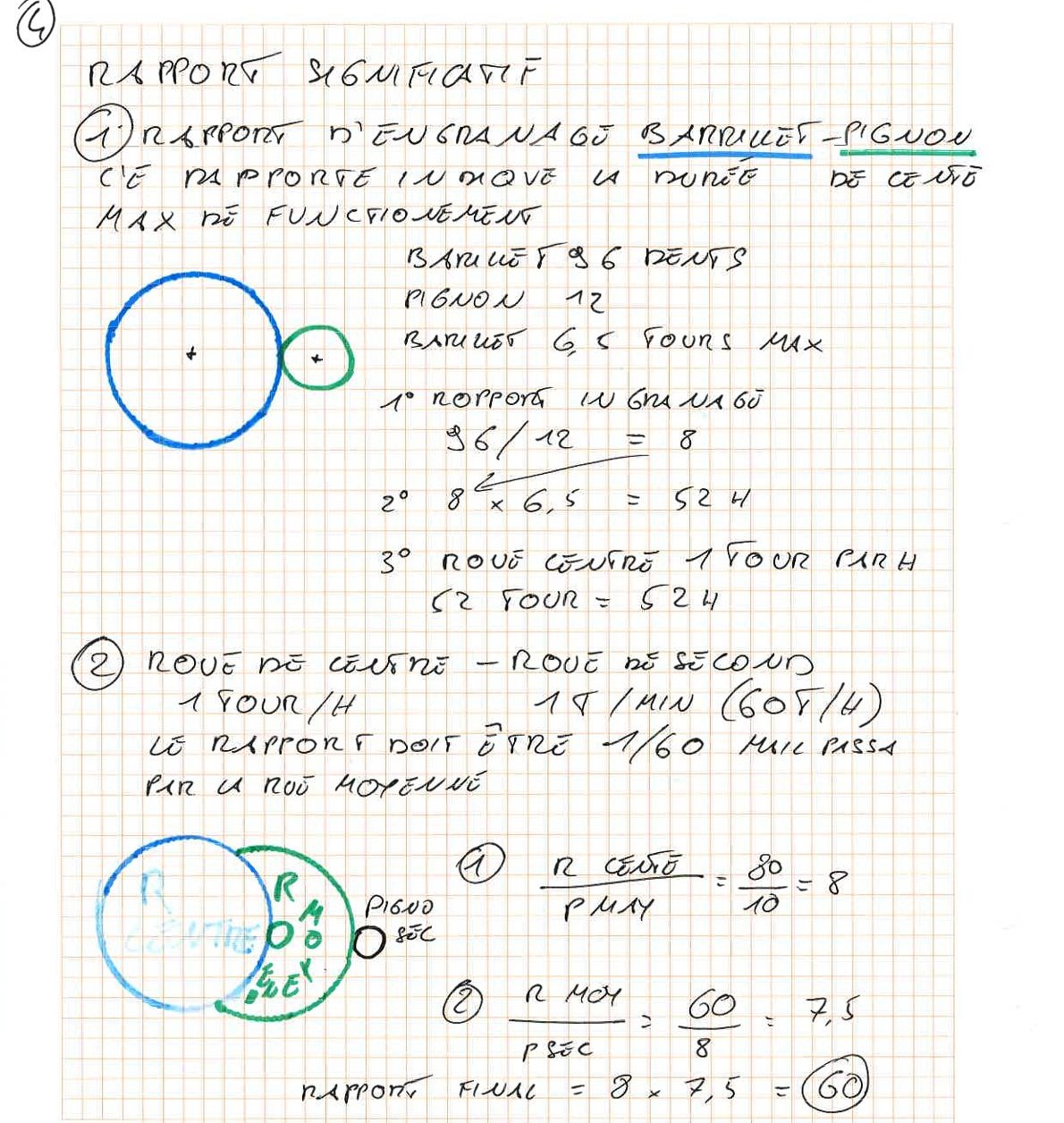
📷 ORIGINAL HANDWRITTEN NOTE (01-05) — Transmission & Wheels
6. Significant Gear Ratios & Power Reserve Calculation
1° Calculation of Theoretical Power Reserve
- Barrel = 96 teeth | Center pinion = 12 teeth | Winding turns = 6.5 turns max
📐 Formula:
1. Ratio: 96 / 12 = 8
2. Autonomy: 8 × 6.5 = 52 hours.
2° Center Wheel – Seconds Wheel Ratio (1/60)
⚙️ Breakdown:
Center / Third Pinion: 80 / 10 = 8
Third / Seconds Pinion: 60 / 8 = 7.5
🎯 Global Ratio: 8 × 7.5 = 60.
📷 ORIGINAL HANDWRITTEN NOTE (01-06) — Significant Ratios & Calculations

.jpg)